Welcome to the 303 LIFE - Fire Hazard Indicator
This tutorial explains the 30-30-30 fire danger rule, why it matters, and how different regions apply it. Follow the steps to build your knowledge progressively.
Step 1: Learn the Basics
The 30-30-30 rule is a simple indicator of extreme fire danger:
- Temperature ≥ 30°C → fuels dry rapidly.
- Relative Humidity ≤ 30% → fuels lose moisture, ignition spreads faster.
- Wind Speed ≥ 30 km/h → flames intensify, embers travel far.
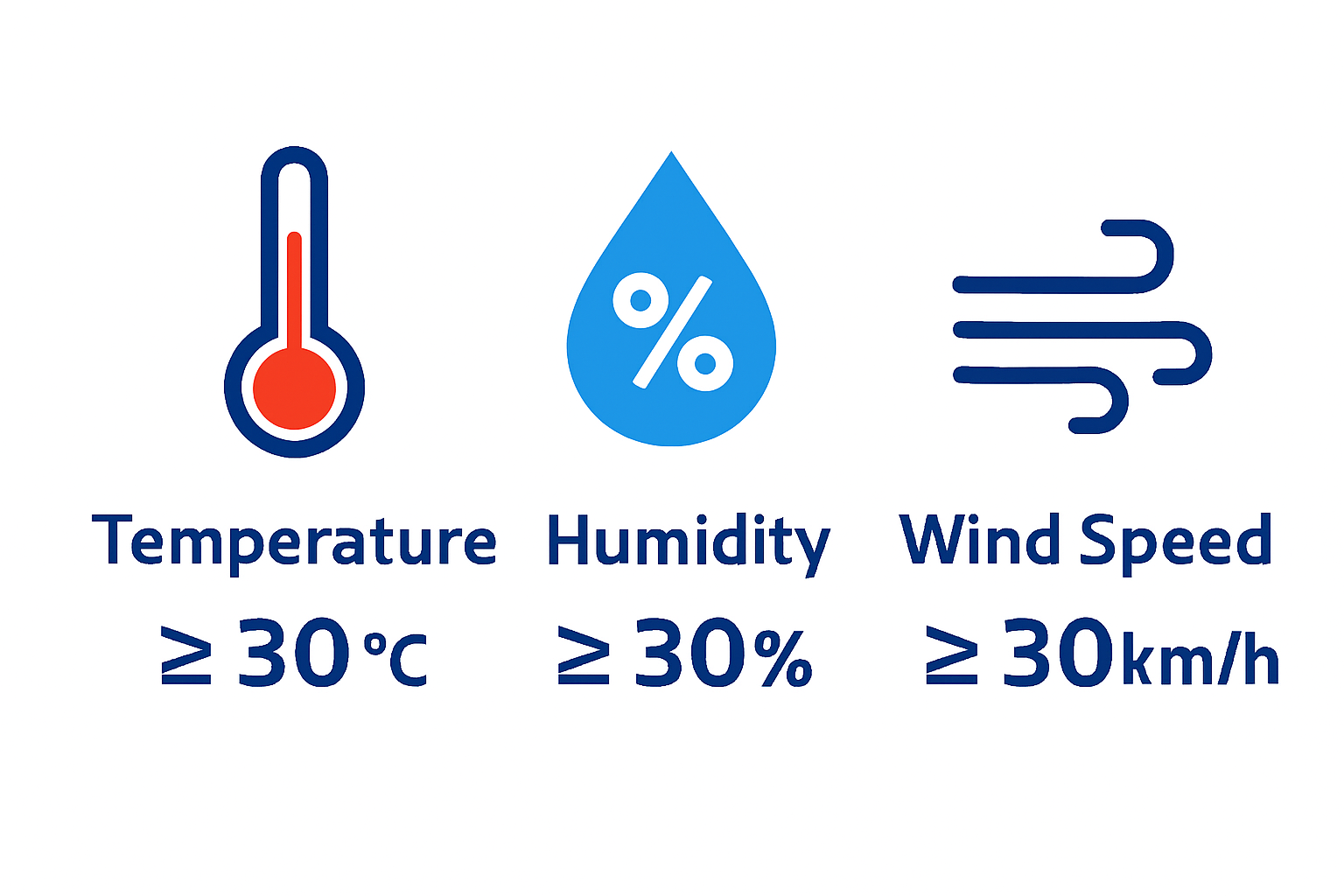
When all three occur together, fires often become uncontrollable.
Step 2: Understand Why It Matters
When Fire under 30-30-30 conditions:
- Fire suppression is nearly impossible.
- Evacuation becomes the first priority, unless you sure you will be SAVE to stay inside the building, try to escape if possible, because there is nothing much fire fighter can do, the decsion may become not let it spreads faster, but just let it burn till the end.
Step 3: How to USE?
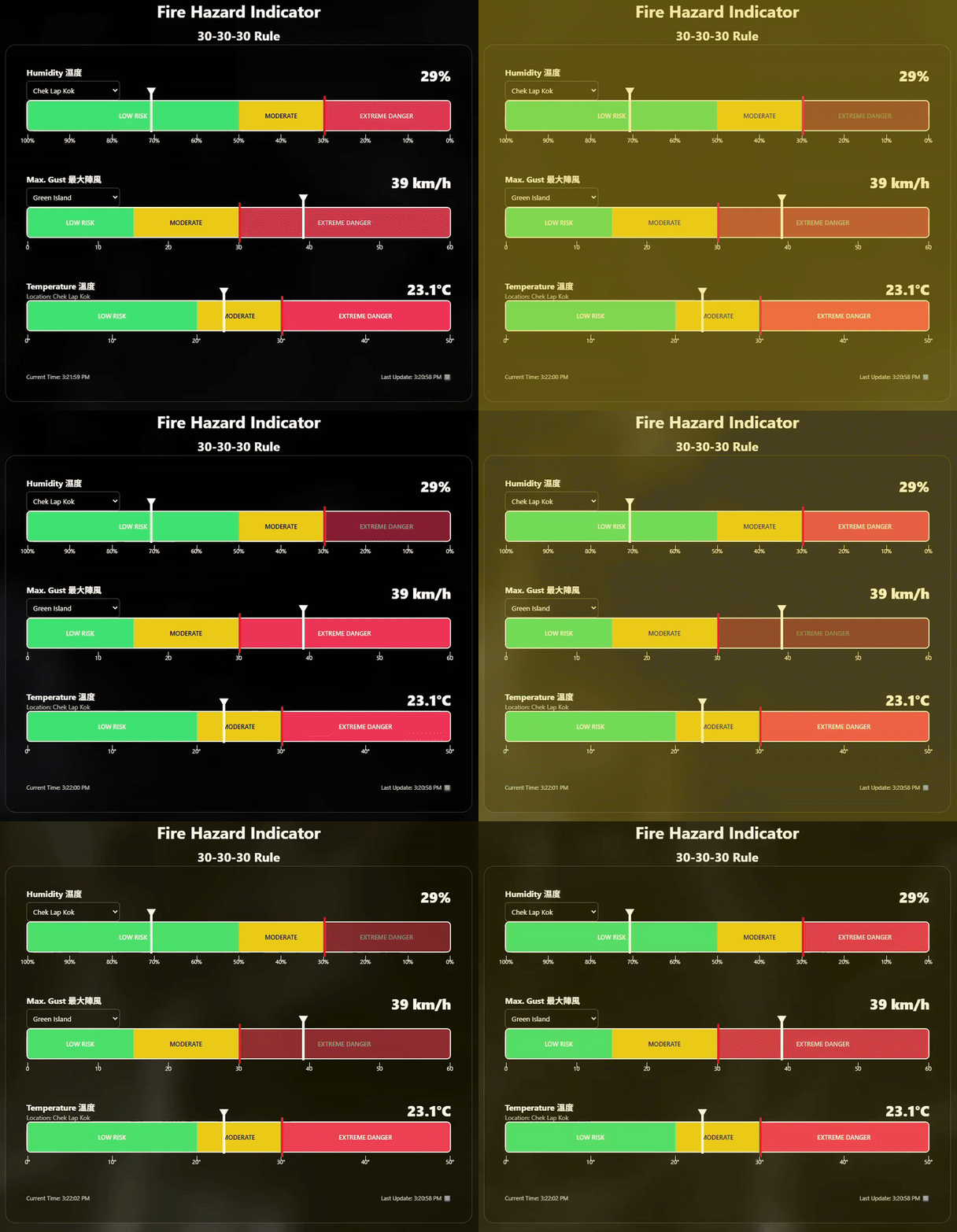
This step explains how the danger indicators work in practice and how alerts should behave:
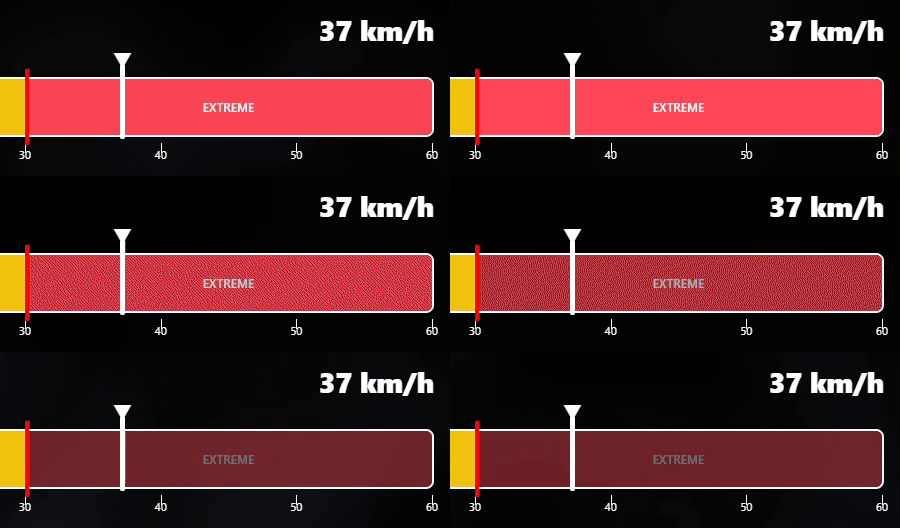
- Single Trigger: If any one of the three indicators (temperature, humidity, wind) enters the danger zone, the system will activate an alert sound and flashing light as the first warning.
- Data Updates: The page automatically checks official government fire‑weather data every 10 minutes to stay current.
- User Controls: You can mute the sound or acknowledge the alert to temporarily silence it. The system will re‑activate if new danger conditions are detected.
- Multiple Triggers: If two or more indicators reach the danger zone at the same time, the entire background will flash continuously to signal a serious alert that requires immediate attention.
Global Adoption & References
Different regions use the rule or similar thresholds. The table below now includes the year of adoption or popularization:
| Region | Use | Year of Adoption / Popularization | Trigger Events | Notes |
|---|---|---|---|---|
| Canada | Explicit 30‑30‑30 rule in public wildfire messaging | 2018–2020 (popularized), widely publicized by 2024 | Fort McMurray 2016, BC fires 2017–2018 | Shorthand for public alerts; based on Fire Weather Index |
| United States | NFDRS & Red Flag Warnings (similar criteria) | NFDRS: 1972; Red Flag criteria standardized in 1980s | Great Fire of 1910, Yellowstone 1988 | No 30‑30‑30 phrase; thresholds vary by state |
| Australia | Forest Fire Danger Index (FFDI) | 1967 (FFDI formalized), national adoption by 1990s | Black Friday 1939, Ash Wednesday 1983, Black Saturday 2009 | Uses “Catastrophic” ratings tied to FFDI thresholds |
| Europe (Spain, Portugal, Greece) | EFFIS & national indices | EFFIS launched 1998; national systems matured 2000s–2010s | Portugal 2003, Greece 2007, Spain 2017–2024 | Adapted Canadian Fire Weather Index; no 30‑30‑30 term |
| Asia (Indonesia, China, India, Thailand) | FAO-supported fire danger systems | 2000s onward (regional adoption varies) | Indonesia haze 1997, Siberian fires 2019–2020 | Humidity, wind, and drought indices used; no 30‑30‑30 shorthand |
Dive Deeper with References
Explore official resources for more detail:
- How the 30-30-30 Crossover Rule affects the threat of a wildfire sparking
- CBC News: What is the 30-30-30 rule?
- Natural Resources Canada – Fire Danger Rating
- US National Weather Service – Fire Weather
- Australian Bureau of Meteorology – Fire Weather Centre
- European Forest Fire Information System (EFFIS)
- FAO Fire Management in Asia-Pacific
- Wikipedia on Wildfires in Galicia that the air formula 30/30/30 = forest fire
Terms of Use & Disclaimer
Acknowledgment: By using this dashboard, you acknowledge and agree to the following terms:
Data Source: All meteorological data (Temperature, Humidity, Wind Speed) is retrieved directly from the Government Weather Department API. The developer has no control over the availability, latency, or accuracy of this external data.
Liability: This tool is intended for informational and educational purposes only. The developer assumes no responsibility or liability for any errors, omissions, or false displays in the data, nor for any damages, accidents, or losses resulting from the use of this system. Users should verify critical conditions with official government sources.